GMOs, Organic Food, and an Honest Immigration Update
What the evidence actually says about GMOs and organic food, a win for my Preventr platform, and a candid look at the physician visa system.

Preventr, GMO, Organic, Unpleasant Immigration
Welcome to another issue of unPRESCRIBED.
We will be covering today Genetically Modified Organisms (GMO), Organic Food, my Preventive Medicine platform (Preventr) and I will share my current visa situation.
Quick update first - Preventr
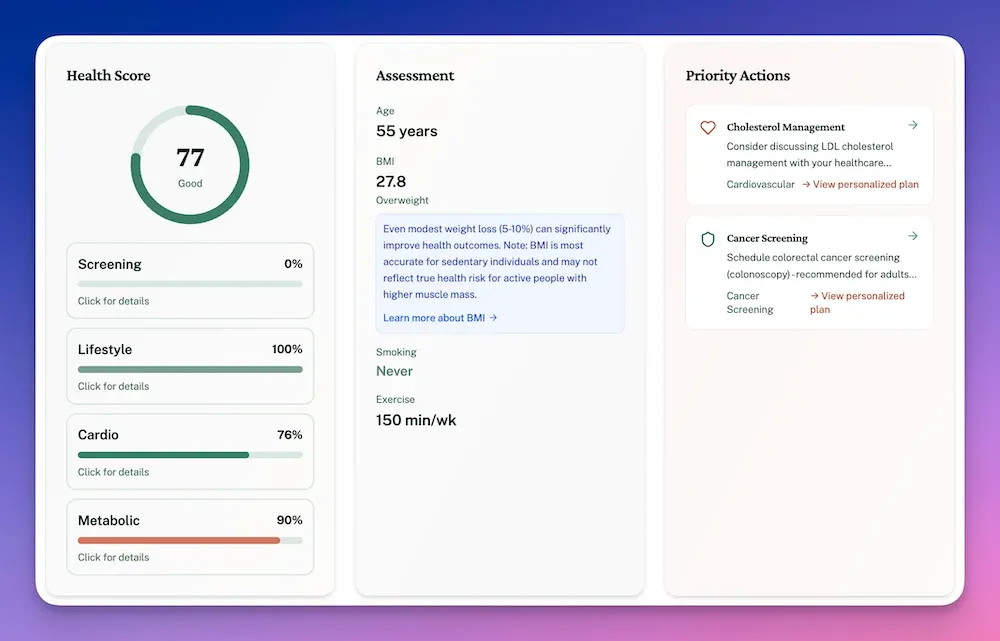
Preventr placed 2nd at the Hackathon 🥈
Before diving in, I want to share some good news.
Preventr, the preventive health platform I’ve been building, placed second amongst 20,000 participants (yes!) in the hackathon by Half Baked (great technology newsletter for developers, by the way) Bolt.new.
This only happened because:
- People voted
- People tested the platform
- People took the time to give honest feedback
So thank you very much!
You can learn more about Preventr here:
👉 https://preventr.deolifyhealth.com/
And if you’re curious, this is the exact video I submitted for the hackathon:
👉 https://youtu.be/DXVJ_aqNSMM
Now that judging is over, I’ll be actively improving the platform again, fixing the bugs, adding new content, and expanding features.
Dose of the week
I recently published two somewhat related videos and how often marketing dictates our perception of what is good and healthy, and what is not.
The supplements people waste money on
In the first video, I talked about supplements that are not necessarily harmful, but often provide very little return for the money, especially when budgets are tight and you are making an extra effort to buy them, falling for false promises.
In summary, I talked about fat burners, BCAA, Collagen, and Green Powders.
👉 You can check the video here on instagram.
Genetically Modified Organisms
The second video was a very misunderstood and feared topic in nutrition: GMOs.
What you must understand is that GMOs are:
- Heavily regulated
- Not inherently unsafe
- Often more predictable than natural genetic changes
👉 Check out this video.
A Short Note on Organic Foods
I haven’t made a video on organic foods, but I think I will. In the meantime, I wanted to address a few things about them.
Organic does not automatically mean:
- Pesticide-free
- Pollutant-free
- Antibiotic-free
- More nutritious
Organic farming uses different standards, not zero chemicals, and large reviews show inconsistent health differences.
In reality, many farmers use low-input or sustainable practices but don’t seek an “organic” label because of cost and administrative burden. The label reflects a certification process — not necessarily how many chemicals end up on your plate.
Remember, eating enough whole foods matters far more than the label.
My open diary
The Immigration Burden on Physicians
I am currently in São Paulo, Brazil, and was obligated to leave my wife and children in the United States. I want to explain how the J-1 physician visa works—and what is my specific situation.
The J-1 physician visa is, in my view, one of the most frustrating immigration pathways in the U.S. It is based on legislation written 70 years ago, in a world that looked very different from today.
It is intentionally difficult to immigrate through this visa, since one of the core requirements to obtain a J-1 is that you do not intend to immigrate (and they ask). The premise is that you come to the U.S. for training that is superior to what is available in your home country, and then return home for at least two years to apply that knowledge—unless you secure a waiver.
One common waiver pathway is the Conrad 30 program, which allows each state to sponsor up to 30 physicians per year. In reality, far more physicians apply than there are slots available. These waiver jobs are often highly demanding and, in some cases, borderline abusive (gladly not case of my wife’s job, more on that soon). Physicians must commit to at least three years in a single position, with little flexibility. If the job becomes untenable, the most common alternative is giving up on the job and waiver, and leaving the country altogether—which is not a simple option when you have a family.
The reality is that most physicians who arrive on J-1 visas eventually build their lives in the US. Careers, friends and other relationships, families, houses, cars, pets, and so on. And then find themselves trapped in this system.
That is exactly what happened to my family.
We have lived in the United States for seven years. My wife trained in Neurology on a J-1 visa, and when I matched at the University of Rochester for Preventive Medicine residency, she was fortunate to secure one of only two waiver positions the institution receives each year. That year alone, there were six applicants for those two spots. And not more than six because they know they usually get two or three waivers per year. Otherwise they would have had dozens of applicants.
Things worked relatively well until I graduated.
Preventive Medicine does not meet the criteria for most waiver jobs, since it has too much administrative duties. After actively searching for (way) more than a year, I did not find a single position that could realistically sponsor me. I did had some interviews and institutions that were willing to try, like Emory and a Health System from Northern California, but unsuccessfully. And yes, other specialties face the same structural problem (path, radiology, research and administrative positions [CEO, CMO, etc.], and others).
So what are we doing now?
- We have applied for a Hardship Waiver. However, family separation is usually not considered sufficient hardship to qualify. But it is what we had. And the processing times can also exceed two years. For us, it’s been around 6 months since the submission.
- In the meantime, we created a company that is sponsoring me for an O-1 visa. The petition was submitted three months ago, and I have now received authorization to schedule my consular interview. If approved, I will still need a waiver for the rest of my life to obtain a green card and finally be free to work with whatever I want, for any company I want. The O-1 is valid for one to three years and limits my work only to the sponsoring company.
I won’t lie: this is one of the most frustrating aspects of being an IMG on a J-1 visa. Especially if you have a family.
If you trained in the United States, you understand how demanding the process is—and how many sacrifices are made, not only for our careers, but in service of the system itself.
For now, this is our reality. And we will move forward.
Stay curious, e até mais,
Igor